

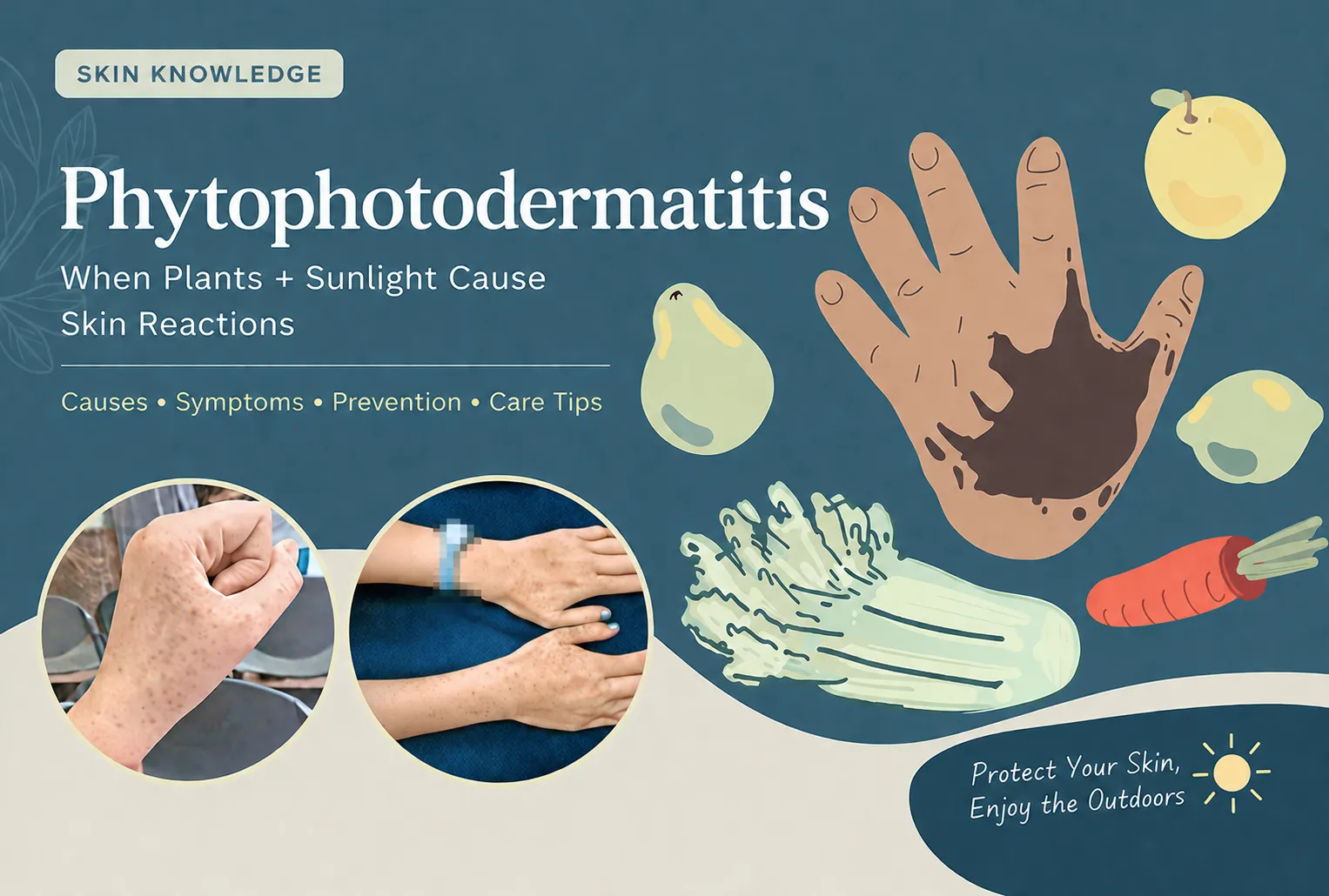
Have you ever noticed a painful rash or dark patches on your skin after gardening, hiking, or squeezing a lime outdoors? It may not be an allergy—it could be Phytophotodermatitis, also known as plant-induced sun dermatitis.
Although the name sounds complicated, this condition is more common than many people realize, especially in tropical countries like Malaysia where sunshine is strong all year round.
What Is Phytophotodermatitis?
Phytophotodermatitis is a skin reaction that occurs when certain plants come into contact with your skin and are then exposed to sunlight, particularly UVA rays.
Certain plants contain natural compounds called furocoumarins (psoralens). These substances become activated by sunlight and can damage skin cells, causing inflammation. This is a phototoxic reaction, not an allergic reaction, meaning anyone can develop it if exposed to enough of the plant chemicals and sunlight.
Common Plants That Can Cause It
Several everyday fruits and plants contain these light-sensitive compounds, including:
- Lime and lemon
- Bergamot orange
- Celery
- Parsley
- Coriander (cilantro)
- Fig leaves
- Wild parsnip
- Giant hogweed
Outdoor workers, gardeners, hikers, farmers, bartenders, and people preparing citrus drinks outside are at higher risk.
Signs and Symptoms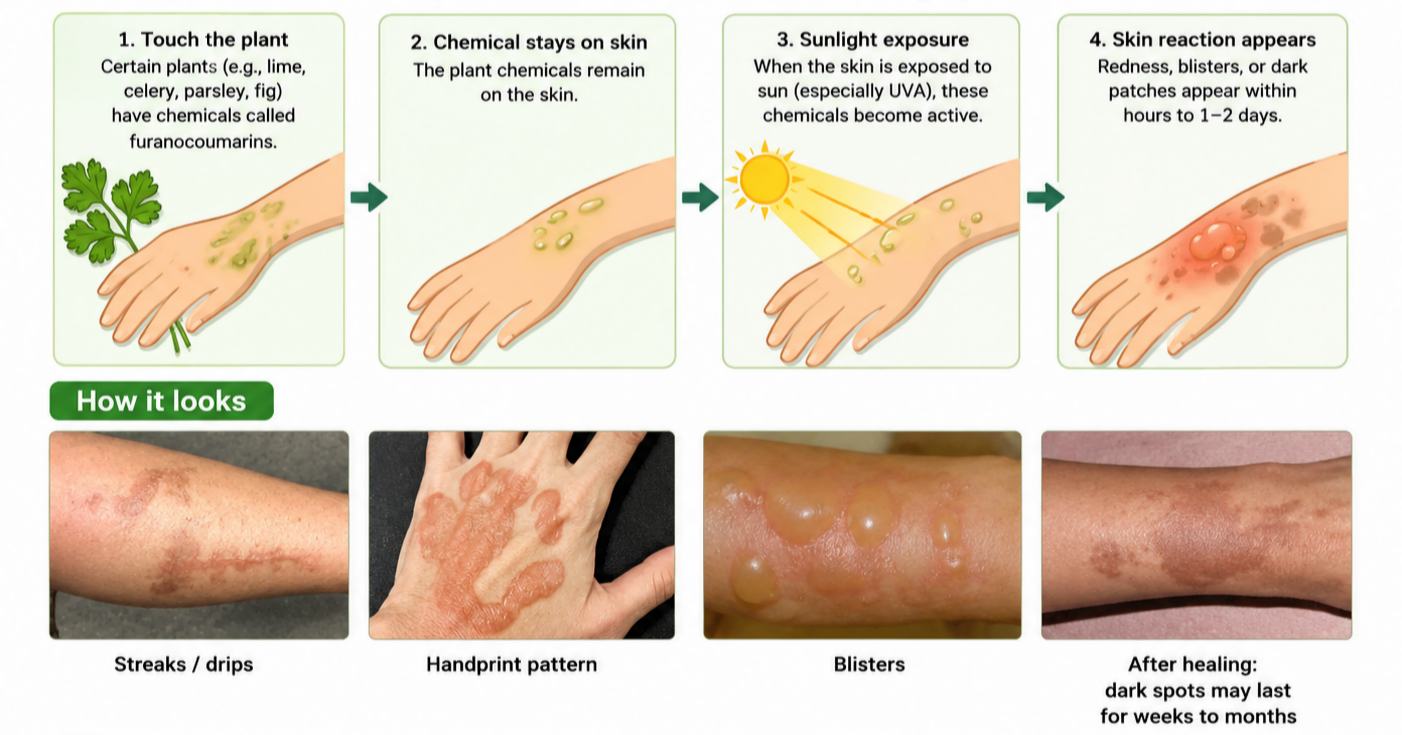
Symptoms usually develop within a few hours to two days after exposure and may include:
- Redness and inflammation
- Burning or stinging sensation
- Painful blisters
- Swelling
- Skin lesions that often appear in unusual streaks, drips, fingerprints, or hand-shaped patterns
- Brown or dark pigmentation after healing, which may last for weeks or even months
Unlike eczema or allergies, itching is often mild, while burning and tenderness are more common.
What Should You Do?
If you think you've developed phytophotodermatitis:
- Wash the affected area thoroughly with soap and water as soon as possible.
- Avoid further sun exposure and keep the area covered.
- Apply a cool compress to relieve discomfort.
- Use sunscreen once the skin begins healing to reduce long-term pigmentation.
- Seek medical advice if large blisters develop, the rash is extensive, or the face and eyes are affected.
How Can You Prevent It?
Prevention is simple:
- Wash your hands after handling citrus fruits or certain plants.
- Wear gloves when gardening.
- Avoid direct sunlight after contact with high-risk plants.
- Apply broad-spectrum sunscreen before outdoor activities.
- Educate children about avoiding unknown plants during outdoor play.
Is It Dangerous?
Most cases heal completely with proper care. However, the resulting dark pigmentation can persist for several weeks or months. Severe cases with extensive blistering may require medical treatment.
Final Thoughts
Phytophotodermatitis is often mistaken for an allergy, insect bite, burn, or skin infection. Understanding the connection between certain plants and sunlight can help you recognize the condition early and prevent unnecessary discomfort.
If you develop an unusual rash after outdoor activities, especially after handling citrus fruits or plants, consider the possibility of phytophotodermatitis and protect your skin from further sun exposure.
Healthy skin starts with awareness. Knowing what causes plant-induced sun dermatitis is the first step toward prevention.